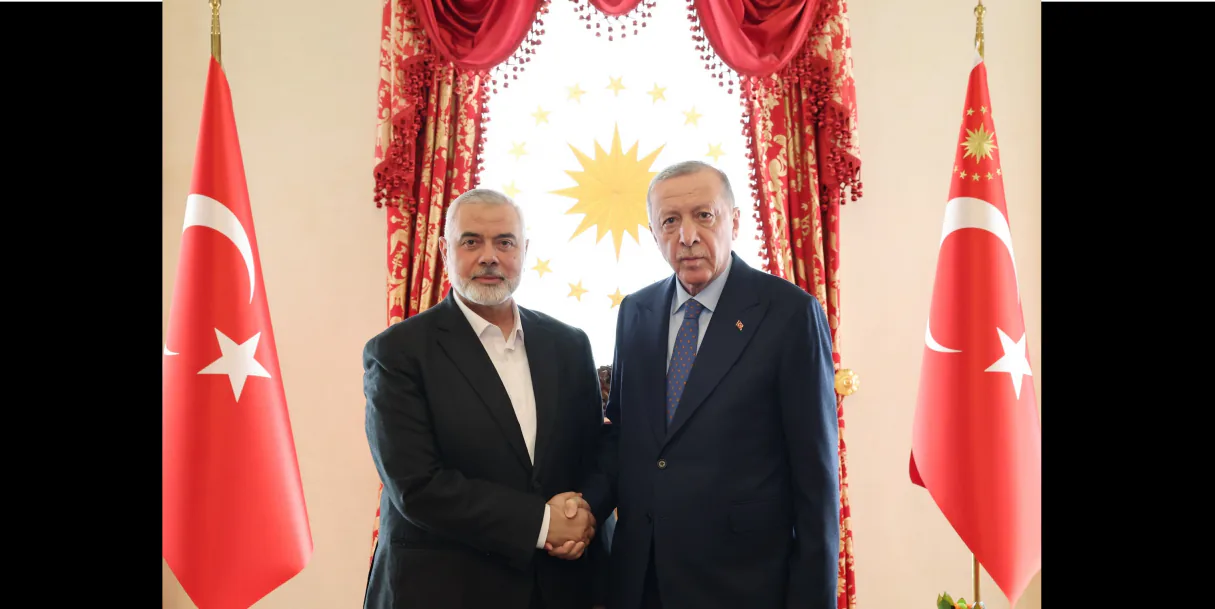
On October 9, 2026, Turkish Foreign Minister Hakan Fidan welcomed Hamas political bureau chief Khalil al-Hayya to Ankara. It was another official encounter in a long history of Turkish government meetings with Hamas leaders, whom President Recep Tayyip Erdoğan has repeatedly welcomed and publicly defended.
Hamas has been designated a Foreign Terrorist Organization by the United States since 1997, and American authorities continue pursuing financial networks supporting the organization inside Turkey.
Yet Ankara's international relationships extend far beyond its contacts with Hamas. Turkish government institutions, state-linked companies and official media outlets have also developed relationships with influential organizations inside the United States.
One of them is CAIR.
In February 2026, CAIR's national executive director, Nihad Awad, appeared at a Ramadan gathering at the Diyanet Center of America in Maryland. Organized by MÜSİAD USA, the event brought together Turkish business representatives, diplomatic officials and American political figures.
Awad spoke alongside Turkish commercial counselor Elif Gürsoy and education counselor Fatih Başaran. Turkey's religious-affairs counselor Fatih Kanca also participated.
To an ordinary observer, it might have looked like another community dinner attended by diplomats and civic leaders. But the venue was the American center of Turkey's Directorate of Religious Affairs, the government institution operating under the Turkish presidency.
And Awad's appearance was only the latest chapter in a relationship stretching back more than a decade.
The Turkish Connections Reach CAIR's Highest Leadership
In November 2025, the Network Contagion Research Institute (NCRI) and Intelligent Advocacy Network (IAN) published Foreign Lines of Influence, an investigation examining CAIR Action's political operations and the wider CAIR network's relationships with Turkish state-linked institutions.
The researchers documented a history of political meetings, financial sponsorships, media appearances and organizational partnerships involving some of CAIR's most senior figures.
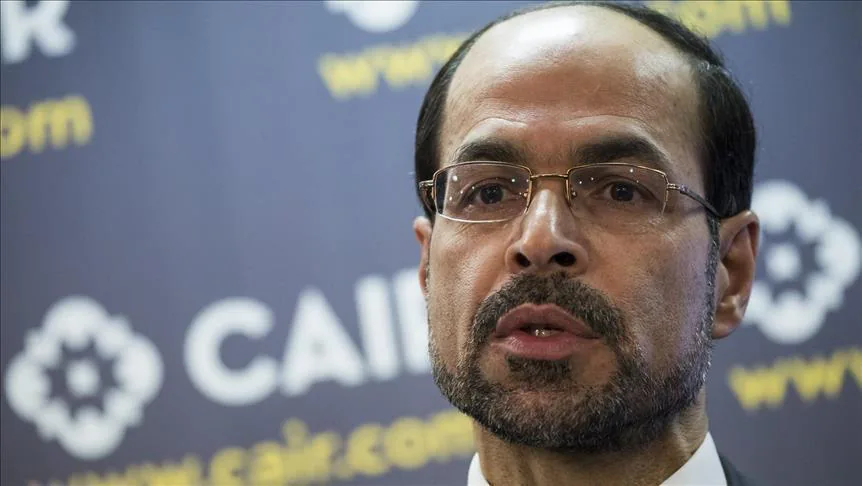
Awad's relationship with Turkish officials is particularly notable.
The report includes photographs of the CAIR executive with President Erdoğan in 2016, Turkish Ambassador Serdar Kılıç, and senior officials from Turkey's Directorate of Religious Affairs.
CAIR's own records provide further confirmation of the institutional relationship.
At its annual banquet in October 2015, CAIR presented the Republic of Turkey with its Humanitarian Award, accepted by Ambassador Kılıç. The organization publicly praised Turkey's role in accommodating Syrian and Iraqi refugees.
The following year, representatives of Erdoğan's ruling Justice and Development Party met Awad in Washington as part of a campaign to promote Ankara's position following the failed coup attempt in Turkey.
Over the years, CAIR also hosted Turkish delegations and maintained contacts with the country's diplomatic and religious leadership.
The relationships extended into financial sponsorship.
Turkish Airlines, whose largest shareholder is Turkey's sovereign wealth fund, has supported CAIR events across several American cities.
The NCRI investigation identifies the airline as a sponsor of CAIR Chicago's 2012 annual banquet, a sponsor of CAIR Los Angeles events in 2014 and 2016, and a Bronze+ sponsor of CAIR New York's 25th anniversary gala in 2023.
The New York sponsorship category was valued at approximately $2,500 to $5,000, according to the researchers.
Turkish Airlines was also among the sponsors of the May 2026 graduate student symposium at the Diyanet Center.
Corporate sponsorship is a familiar way for companies to develop relationships with influential organizations. In this case, however, the sponsoring company has a substantial connection to the Turkish state, while the recipient organization maintains relationships with Turkish diplomatic and religious officials.
And the same institutional network has been involved in training young Americans for political and civic engagement.
Turkey's Religious Network and American Youth Leadership
The Diyanet Center of America describes itself as operating in full coordination with Turkey's Directorate of Religious Affairs, which appoints religious personnel serving at the American institution.
Its relationship with CAIR is considerably older than the recent events in Maryland.
CAIR's own announcements identify the Diyanet Center as a sponsor of its Maryland Muslim Youth Leadership Symposium in 2016 and 2019.
The 2019 program, titled From Powerlessness to Protest: Youth Activism for Social Change, brought teenagers to the Maryland state legislature for discussions about political activism, public speaking and civic leadership.
In 2024 and 2025, the Diyanet Center again appeared among the organizational sponsors of CAIR's youth leadership programs, this time held inside the Rayburn House Office Building on Capitol Hill.
The programs were designed for young people aged 13 to 19, offering training in media influence, advocacy, political engagement and community organizing.
Participants also met congressional staff members and learned how American political institutions operate.
The relationship continued into May 2026, when the Diyanet Center hosted its graduate student symposium in Maryland. Its scientific committee included Ahmet Selim Tekelioğlu, executive director of CAIR-Philadelphia, alongside Turkish religious-affairs representatives working in several American cities.
Tekelioğlu also delivered an opening address.
The Diyanet partnership therefore extends across years, from youth programs to academic events and direct involvement by CAIR executives.
Meanwhile, Turkey's religious-affairs establishment continues participating in international programs connected to Ankara's regional political priorities.
In August 2026, Diyanet was identified among the partners of the Hope Forum in Istanbul, an event promoting political and religious messaging about Palestine to international audiences. Promotional materials featured Basem Naim, a senior Hamas official sanctioned by the United States, and former Hamas figure Abd al-Nasser Issa.
The event's stated aims included training participants to communicate political messages to Western audiences and develop networks capable of spreading those messages internationally.
The relationship between Diyanet's activities abroad and its American partnerships gives additional significance to CAIR's repeated cooperation with the institution, particularly in programs involving political advocacy and youth leadership.
But Turkey's influence infrastructure extends beyond religious institutions. It also includes an international broadcasting operation with which CAIR officials have maintained a remarkably active relationship.
From Ankara's State Television to CAIR's Political Operation
TRT World is Turkey's state-owned international broadcaster, providing Ankara with a platform for reaching audiences well beyond its borders.
According to the NCRI investigation, six CAIR representatives appeared in at least eleven identified TRT World interviews between 2015 and 2025.
Nine of those interviews focused on Israel or Palestinian political issues, while the remaining two concerned American politics and Donald Trump.
Among those appearing on the broadcaster were CAIR national executive director Nihad Awad, deputy director Edward Ahmed Mitchell, CAIR Chicago executive director Ahmed Rehab and CAIR California leader Hussam Ayloush.
Mitchell appeared in three interviews identified by the researchers, as did Ayloush.
CAIR repeatedly promoted these appearances through its own websites and social media channels, extending their reach to the organization's American audience.
The relationship continued in 2026, with CAIR promoting additional TRT World interviews involving senior officials, including Mitchell and Ayloush.
The broadcaster gains access to American voices discussing issues central to Turkish foreign policy, while CAIR executives receive international exposure through a government-owned media platform.
Ayloush has also publicly praised Erdoğan. In a 2023 social media post cited by NCRI, he described Erdoğan's popularity in Muslim countries as reflecting his political achievements, national pride and Muslim identity.
These relationships form part of the wider institutional environment in which CAIR Action, the organization's political advocacy affiliate, operates.
The NCRI report identified at least eight individuals holding roles across CAIR and CAIR Action, including Edward Ahmed Mitchell, Ahmed Rehab, national board chair Manal Fakhoury and treasurer Eyas Abdeen.
The researchers also found that 23 of the 84 public statements they examined from CAIR Action had been issued jointly with CAIR.
This overlapping leadership connects the organizations' public advocacy and political operations, making the foreign relationships maintained by senior CAIR officials relevant to understanding the wider network.
The researchers then identified a more unusual connection involving CAIR Action's online accounts.
When X introduced additional account information in November 2025, both the official @CAIRAction account and the account belonging to CAIR Action executive director Basim Elkarra displayed the label Connected via Turkey App Store.
Both accounts were separately listed as based in the United States.
CAIR Action explained that its director had originally established the account using a local phone while visiting family in Istanbul.
NCRI challenged the adequacy of that explanation, focusing on the distinction between an account's stated country and the App Store associated with its connection.
The account information identified a Turkish App Store connection, rather than establishing who physically managed the accounts or where political decisions were made.
Nevertheless, the finding added another Turkey-related element to a report already documenting years of institutional contacts, sponsorships and media relationships.
The researchers characterized the combined pattern as indicators of Turkish state alignment within CAIR's broader organizational environment.
The Relationships Behind CAIR's American Influence
The record now extends well beyond isolated diplomatic encounters.
CAIR's national leadership has met with Erdoğan and his political representatives. Turkish Airlines has sponsored CAIR events in several American cities. Diyanet's American operation has repeatedly supported CAIR youth leadership programs, while CAIR executives have participated in events involving Turkish religious officials.
Senior CAIR figures have also appeared regularly on Turkey's state broadcaster, and the organization's political affiliate has faced scrutiny over its overlapping leadership and Turkey-linked account information.
These relationships exist alongside Erdoğan's continuing political engagement with Hamas and repeated American enforcement actions against Hamas financial networks operating from Turkey.
For an organization that participates extensively in American public affairs, the nature of its relationships with foreign government-linked institutions is a significant matter of institutional accountability.
CAIR's leaders have access to elected officials, influence national political debates and help prepare young Americans for civic leadership. The relationships maintained by those leaders, the benefits exchanged through partnerships and the institutional interests involved are therefore part of understanding how the organization operates.
The NCRI investigation brought those connections together in one report. CAIR's own announcements and the publications of Turkish institutions establish many of the underlying relationships.
From Erdoğan's political establishment to Turkish government-linked religious institutions, corporate sponsors and state television, the connections surrounding CAIR are extensive and longstanding. They also extend into the organizational environment of CAIR Action, which engages directly in American political advocacy.
The next chapter of this investigation will examine previously undisclosed ties between CAIR and Turkey, tracing a web of political, organizational, commercial, and personal connections that raise serious questions about foreign influence. As a Muslim American, I believe our communities deserve transparency, accountability, and leadership that serves the interests of American Muslims, not foreign political agendas.